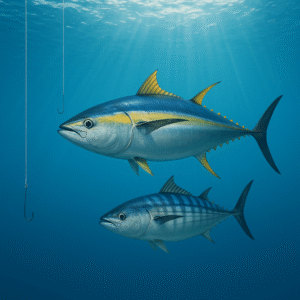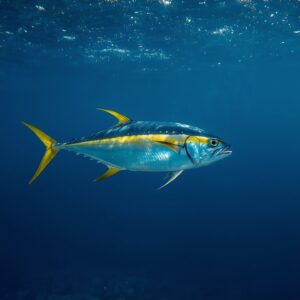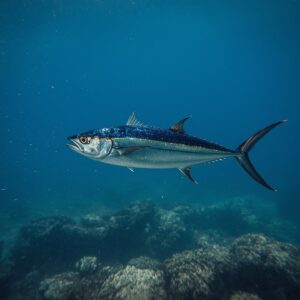



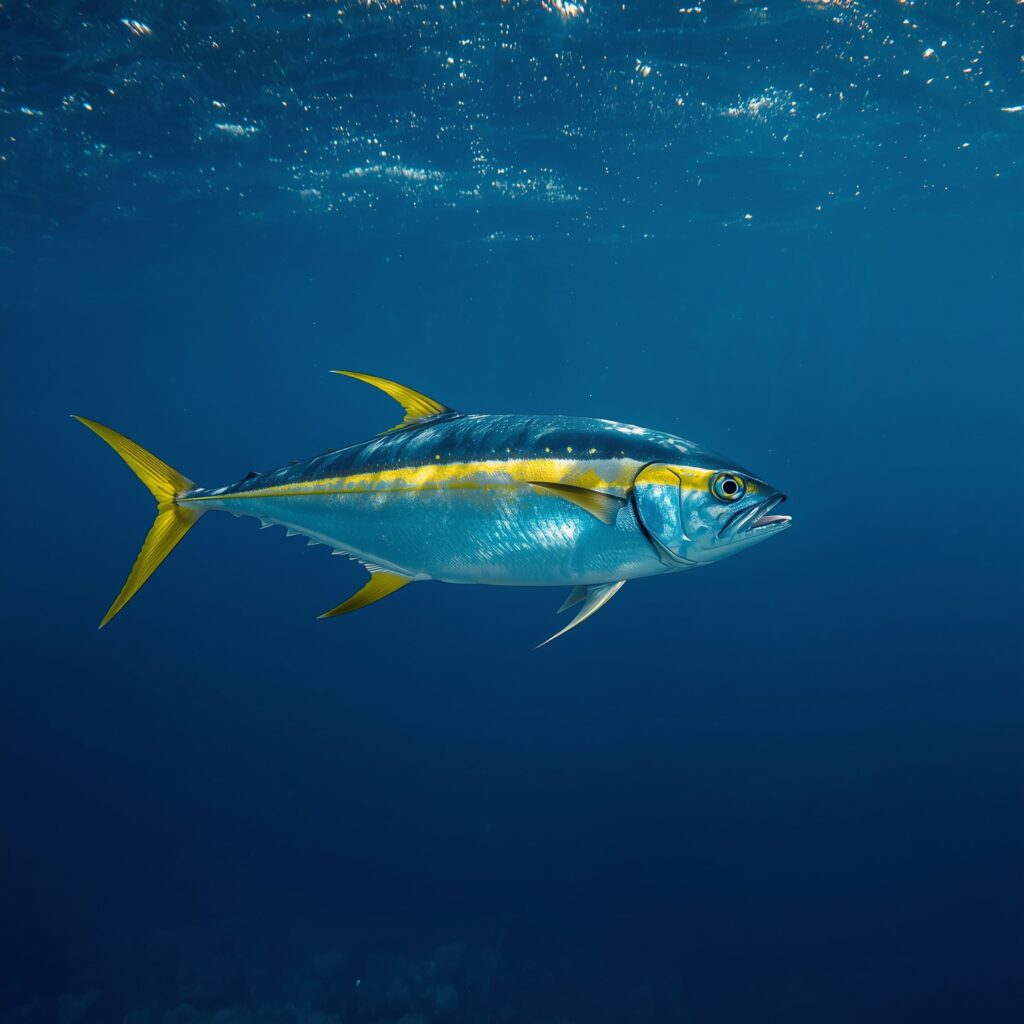
The Yellowfin tuna, also known as Yellowfin, is one of the most migratory fish found in warm oceans across the globe, except for the Mediterranean Sea. Thanks to its powerful swimming ability and elongated fins that reduce water resistance, this species can travel long distances at remarkable speed. Yellowfin tuna grow quickly, have a relatively short lifespan, and are far more widely distributed across the oceans compared to many other tuna species.
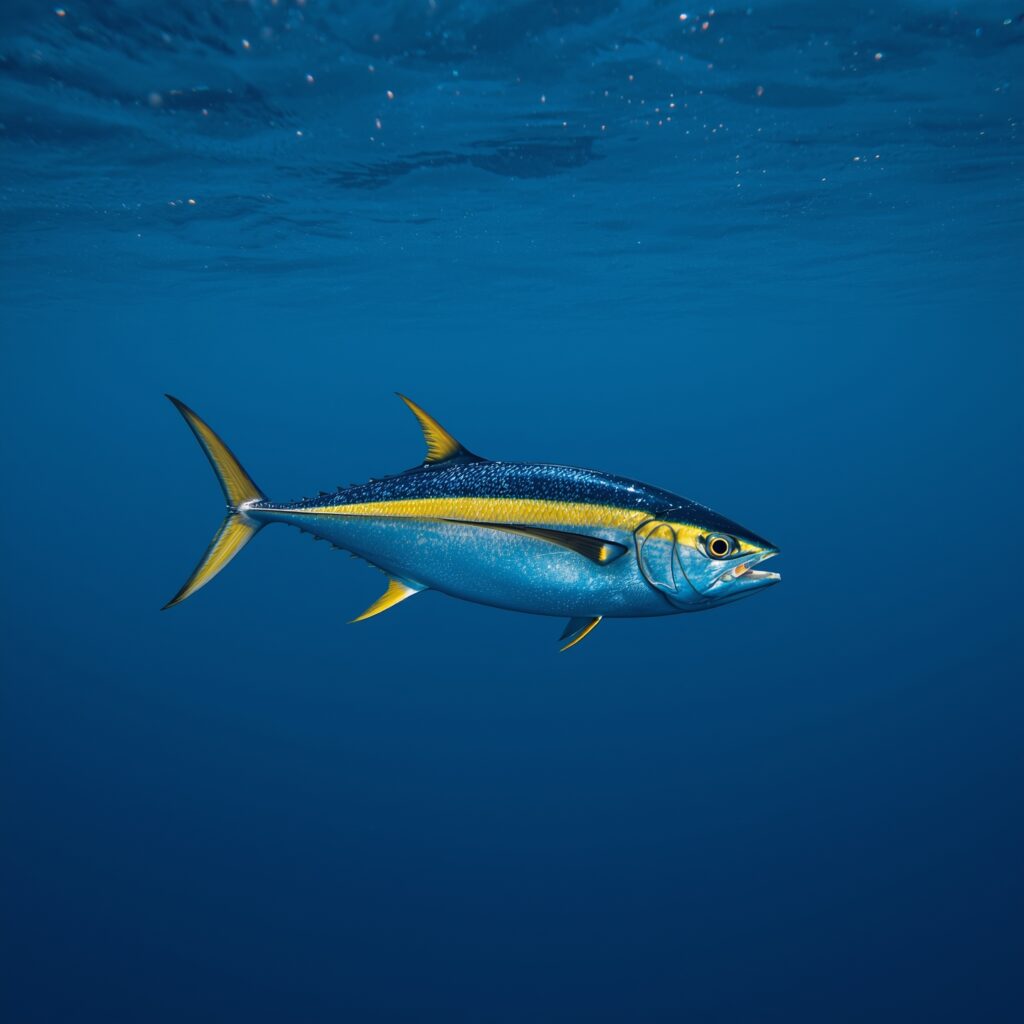
Its body is sleek and streamlined for fast movement. The back is dark blue, fading to yellow and then silver toward the belly. The dorsal and anal fins are bright yellow, which gives the species its name. Distinguishing it from other tuna species is often difficult, except for the long, sickle-shaped dorsal fin found in mature adults. Yellowfin tuna can reach lengths of up to 1.8 meters and weigh more than 180 kilograms.
Taste and Culinary Uses
Yellowfin tuna has a mild, firm flesh. When raw, the meat is bright red, but once cooked it turns brownish-gray while remaining moist and meaty with large flakes. It is available fresh, frozen, or canned, and is especially popular as sashimi and sushi.
Habitat and Behavior
This species is found year-round in tropical and subtropical waters. In Hawaii, its peak presence occurs between May and September, while off the Canary Islands it is most abundant in July and August. It is also present throughout the year in the Gulf of Mexico and off the coast of Louisiana. Larvae and juveniles remain in surface waters, while adults tend to inhabit deeper waters rich in phytoplankton, zooplankton, and smaller prey.
Yellowfin tuna feed on small fish, squid, and other invertebrates. They are highly skilled migrators, traveling vast distances annually, a behavior linked to both feeding and spawning. Reproduction occurs through broadcast spawning, in which multiple males and females release millions of eggs and sperm simultaneously, increasing fertilization chances while reducing the risk of predation.
Physiological Adaptations
Unlike most fish, which are cold-blooded, Yellowfin tuna possess specialized blood vessel structures that allow them to maintain a body temperature higher than the surrounding water. This adaptation provides an advantage when hunting in cooler waters, enabling quicker and more efficient movement. For respiration, they must swim constantly, as they cannot breathe while stationary.
Economic Importance and Conservation
Yellowfin tuna is among the fastest swimmers in the ocean and, thanks to its high quality, flavor, and versatility, it is one of the most popular species in the canning industry, including well-known brands such as Sheltun. Natural predators include sharks and large marine mammals. Because of their extensive migrations—covering thousands of miles across international waters—effective management requires international cooperation, along with strong domestic policies.
Yellowfin tuna often travel in schools of similar size, and sometimes mix with other tuna species such as smaller Yellowfin or Skipjack. Protecting this species and managing its resources sustainably depends on coordinated international efforts.
Conclusion
The Yellowfin tuna stands out as one of the most important tuna species in the world, valued for its speed, long migrations, and high nutritional content. Its flavorful, versatile meat makes it a cornerstone of the seafood and canning industries, giving it great economic significance. However, given the intense fishing pressure and its wide distribution, sustainable management and international cooperation are essential to ensure the long-term survival of this valuable marine resource for future generations.