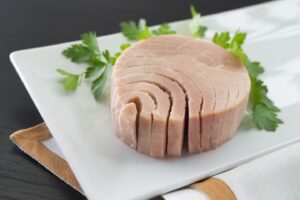



From catch to can; behind the scenes of producing quality tuna
Have you ever wondered how canned fish is produced and what steps it goes through before reaching store shelves in ready-to-eat form? Canning is one of the oldest and most effective food preservation methods, widely used since the 19th century. The process was first invented in 1810 by Nicolas Appert, a French innovator who sought a way to preserve food for long periods for the French army. The core idea of canning is to prevent the entry and growth of microorganisms in a sealed and sterile environment.
Cans used for packaging come in a variety of shapes and materials — circular, oval, square, glass, plastic, or metal. Regardless of the shape or size, every canned product must go through a series of precise steps to ensure it is safe, flavorful, and long-lasting. Below, we will explore the complete process of canned fish production.
1. Fish Preparation
This is the first and one of the most critical stages of production. Once the fish are caught, they are transported to a cold storage facility and kept at a low temperature to prevent spoilage. When production begins, the required amount of fish is removed, defrosted, and transferred to the washing line. High-pressure water is used to remove surface impurities. Large fish are cleaned manually, while smaller fish are processed with specialized machines.
The next step involves separating inedible parts such as the head and internal organs, leaving only the edible flesh. The fish are then washed again to ensure complete cleanliness before cooking. Because fish are highly perishable, these steps must be performed quickly and under hygienic, temperature-controlled conditions.
2. Pre-Cooking (Pre-Cook Stage)
At this stage, the fish meat is partially cooked to make it easier to remove bones and to improve the firmness of the flesh. Pre-cooking can be done using various methods — steam cooking, hot oil, or dry heat. The choice of method depends on the type of fish and the desired final product. For example, in the production of smoked canned fish, the fish are placed in a smoke chamber to develop flavor and enhance preservation.
3. Filling the Cans
After pre-cooking, the cleaned and cooked fish pieces are placed into sterilized cans. The filling amount is carefully measured to ensure consistency in weight and volume. Hot brine or oil is then added to the cans — this liquid not only improves the taste and texture but also acts as a preservative by preventing oxidation and drying of the fish.
4. Exhausting (Air Removal)
Before sealing, the air inside the can is removed by creating a partial vacuum. This step prevents future swelling, bacterial growth, or oxidation inside the can. Properly vacuum-sealed cans show a slight inward curve on their lids after sterilization and cooling, which is a sign of a good seal.
5. Sealing the Cans
Sealing is one of the most vital stages. Using a can seamer machine, the metal lid is firmly attached to the can body. A sealing compound known as “mastic” is often applied to ensure a perfect, airtight connection. Once sealed, the cans are washed again to remove any oil or impurities on the outer surface, preparing them for sterilization.
6. Sterilization (Autoclaving)
The sealed cans are placed inside an autoclave — a pressurized steam chamber — where they are heated at high temperatures. The combination of heat and pressure kills all bacteria, spores, and enzymes that could cause spoilage. The time and temperature required for sterilization depend on factors like the type of fish, the acidity of the contents, and the can’s size and material.
7. Cooling, Drying, and Coding
After sterilization, the cans are rapidly cooled to prevent overcooking and preserve the nutritional value of the fish. They are then dried and coded with a jet printer that prints essential information such as production date, expiry date, and batch number.
Finally, the cans are kept in a quarantine warehouse for 10–15 days to monitor for any signs of leakage, bulging, or spoilage. Only after this observation period are they approved for distribution to the market.
Conclusion
The production of canned fish is a precise and scientific process that combines food technology, hygiene, and quality control. Every step — from raw fish preparation to sterilization and final inspection — plays a crucial role in ensuring the safety and nutritional value of the final product.
Canned fish is not just a convenient food; it represents a perfect balance between traditional preservation techniques and modern food science. Thanks to careful processing, this product remains rich in protein and essential fatty acids while offering long shelf life without refrigeration. Understanding the detailed production process gives consumers a greater appreciation for the technology and precision behind every can of fish — a small container that carries both nourishment and innovation.